Starting skincare: How the two-minute rule makes it easier for you to get started
Even the thought of evening skincare is sometimes too much. The two-minute rule helps you find a small start that fits your everyday life.

Starting skincare: How the two-minute rule makes it easier for you to get started
The hands are already on the blanket. Facial care is still waiting in the bathroom, and suddenly the way there feels surprisingly long. On such evenings, a memorized sequence alone is of little help.
Maybe the beginning can be made smaller: get up, go to the bathroom, take your hair out of your face. A step that leads to care and for which you don’t need a long list in your head.
What James Clear means by two minutes
In The 1% Method James Clear describes an advice technique: A new habit is first given a very short, easy-to-execute initial version. It should make it easier to get started. In our translation to skincare, this may mean putting on the hair band at the sink and providing cleaning. Our article about small habits and self-care explains the larger context.
The two minutes are not a specification for the effect of a cosmetic product. If a cleaner needs to be rinsed off, rinse it thoroughly. Quantities, application instructions and the time required for your care remain unaffected. You don’t need a stopwatch next to the sink either.
A beginning that fits into your evening
Imagine the evening from the sofa. Is it mainly fatigue that is holding you back? Then the right way to start could be before you sit down: After changing, you briefly go to the sink. If, on the other hand, you don’t have an overview between many bottles, another first step can help – to have the basic care you have already selected ready to hand.
These are options to try out. Choose the one that hits your actual obstacle. If, after getting your hair together, you still have to think about which of five peels you should do today, it’s worth simplifying your care selection regardless.
An existing process can be helpful at this point. We show how such a connection can be formulated in the article Linking Habits. The first question is: What first step would be easy for me to do today?
The familiar cleansing remains the familiar cleansing
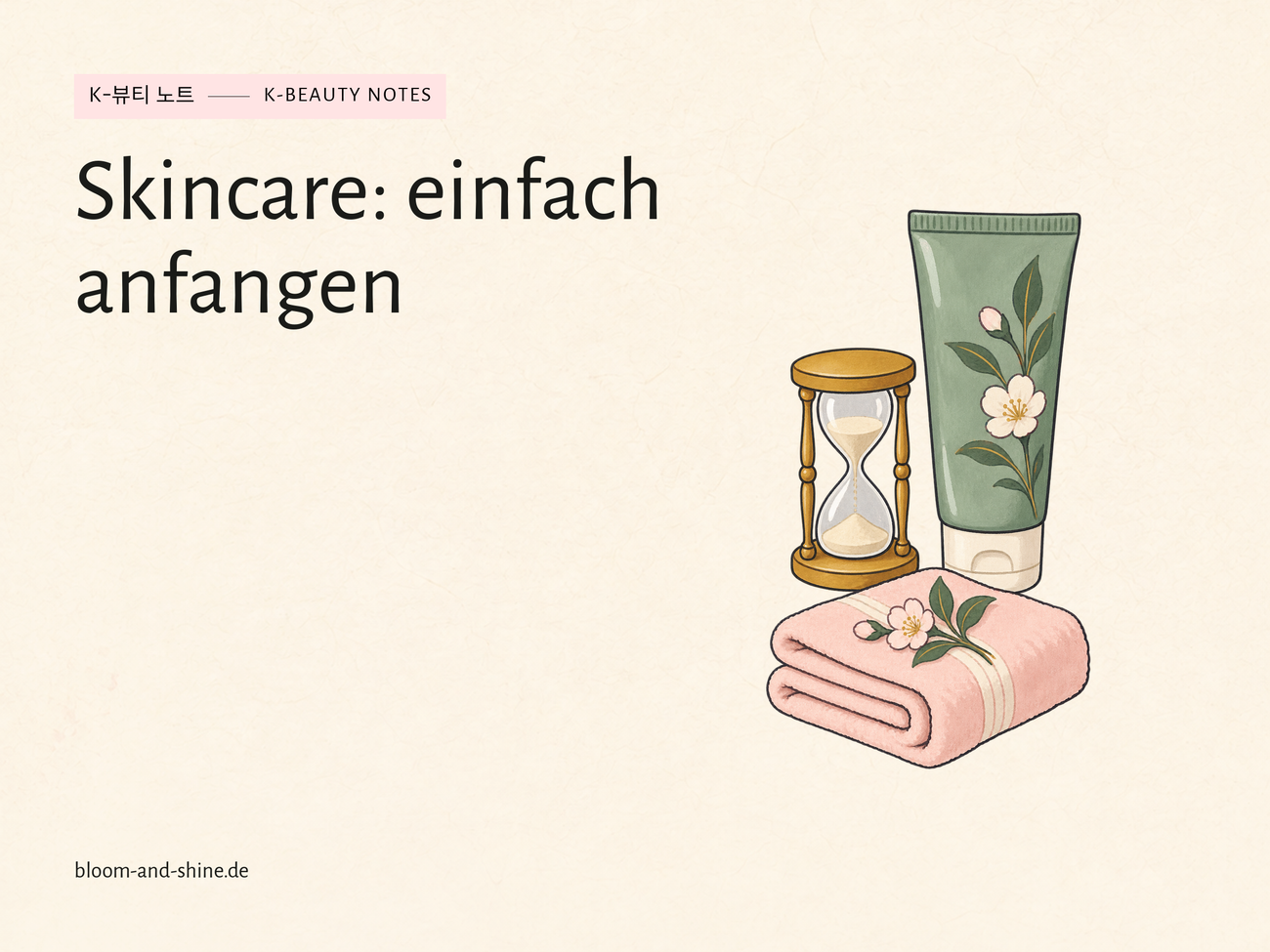
A specific product example is the Beauty of Joseon Green Plum Refreshing Cleanser . The manufacturer describes it as a mild gel cleanser with plum and mung bean ingredients. According to the instructions for use, it is gently applied to the face with wet hands and rinsed off with lukewarm water.
The tube is an example of a clear care step. If you get along well with your current cleaner, use this one. You don’t need a new order for a new process.
Of course, putting on a hair band does not replace cleaning. It’s just the beginning. What then belongs to a morning or evening routine also depends on the time of day and care concerns. And not every additional step belongs every evening: You will find guidance on the question of what care makes sense every day.
A little experiment for today
Write down a single beginning, something like: “After changing, I go to the sink and take my hair back.” Leave out everything that would have to be decided later. Next time, see if this beginning is actually practical.
Maybe you realize that the hair band is in the other pocket or that you prefer to shower in the evening. Then the sentence can be more precise. You are currently collecting information about your everyday life; an inappropriate first attempt is not a character trait.
If a break comes along, our article on getting back to work after an interrupted routine will help you. You can also start preparing outside of the bathroom: open the book and take out the bookmark while the tea is still cooling. Whether a page or a whole chapter follows today remains to be seen.
Lee’s fact note
The two-minute rule is a guide technique by James Clear, not a dermatological time rule. The examples from the bathroom are our editorial application; They neither promise a specific skin change nor guaranteed habit success.
Sources: James Clear: Two Minute Rule ; Beauty of Joseon: Green Plum Refreshing Cleanser and Application . Reviewed September 10, 2026.