Dehydrated or dry skin: What care does your skin need right now?
The forehead shines while the cheeks are tense. Lee explains why water and skin oil are different things and how to adapt your care to your current condition.

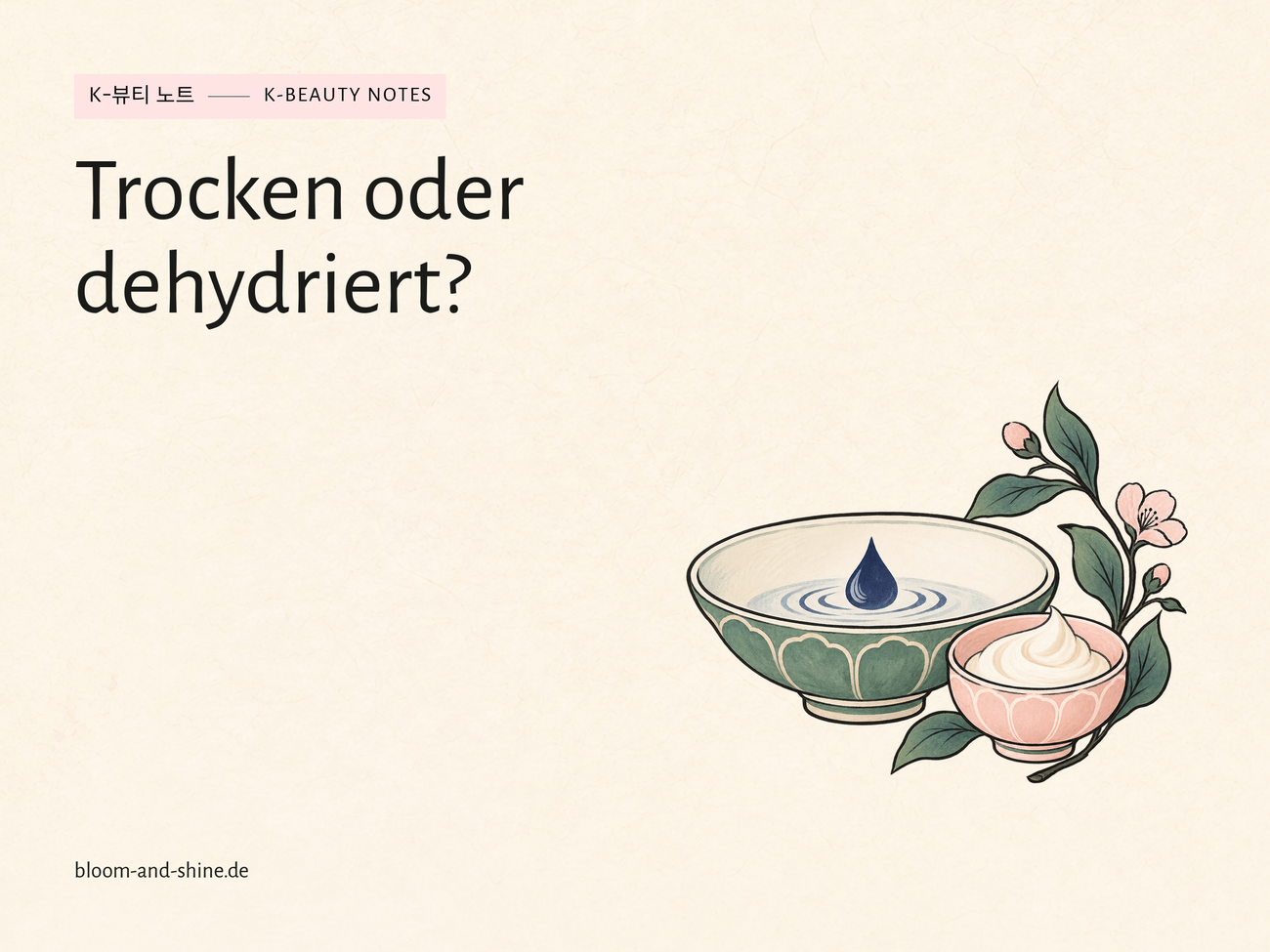
Dehydrated or dry skin: What care does your skin need right now?
The forehead is already shining in the afternoon. Nevertheless, the face feels tight after washing and the foundation settles on the cheeks. When looking for care, suddenly neither “greasy” nor “dry” are particularly suitable.
This is a good moment to look at skin oil and moisture separately. A shiny face tells something about the surface. It does not yet reliably reveal how well the outer layer of skin holds water.
The difference helps – as long as it doesn’t become too severe
In cosmetic advice, dehydrated skin is usually used for a skin condition that lacks moisture. Dry Skin often means a long-standing tendency to have a lower oil content, roughness and a feeling of tightness. This distinction provides guidance for care.
Biologically, the two cannot be clearly separated into “just water” and “just fat”. The stratum corneum, the outermost layer of skin, needs components that bind water and a functioning barrier. When it comes to dry skin, both its lipids and its ability to retain water often play a role.
You don’t have to decide on a final label before you can change something. Our overview What skin type do I have? helps to separate long-standing properties from momentary observations.
Can oily skin be dehydrated at the same time?
Yes. A lot of sebum on the surface does not automatically mean a lot of water in the stratum corneum. In a study of 62 women, the self-assessment of “oily” or “dry” corresponded to the measured amount of sebum, but did not correspond to the measured skin moisture.
This is not a guide to determining dehydration based on shine. It shows why a single feature tells too little. An oily T-zone can also feel uncomfortable after a strong degreasing cleanser.
Then cleaning even more thoroughly against the shine does not have to be the helpful next step. First check whether your cleanser removes residues well and whether the skin feels comfortable afterwards. A squeaky feeling on the skin is not an additional seal of cleanliness.
Monitor progress instead of a quick skin test
A small note is often more useful than picking at a skin fold. Write down when the tightening begins: immediately after cleaning, in a heated office, after a new peeling or only in the evening. Also note which areas are affected.
Has your skin been dull and rough for a long time? Then the more detailed orientation is suitable for dry skin. If the feeling has changed after a product change, it is worth taking a look at this step first.
Photos in similar lighting can complement the gradient. They neither measure water content nor replace an examination. The decisive factor for your cosmetic choice is what changes and when and whether the skin reacts more calmly to simpler care.
Bind moisture and limit loss
Humectants such as glycerin attract water and help to retain it in the stratum corneum. Other components make the surface more supple or slow down evaporation. Many creams already combine these tasks in one recipe.
So you don’t necessarily need a serum plus two different creams. If your current moisturizer is comfortable, start applying and cleansing before adding more layers.
A simple moisturizer can be applied to slightly damp skin after washing. However, special active ingredient products have their own application instructions. The habit of “doing everything on damp skin” cannot be applied to every routine.
Which texture suits the way your skin feels?
When rich cream quickly becomes too much
The ILLIYOON Ceramide Ato Soothing Gel is an example of a lighter moisturizer. According to the list of ingredients, it combines, among other things, glycerin, ceramide NP and squalane. A gel may feel more comfortable if the surface is already oily and you’re looking for a less rich texture.
After use, observe whether the pleasant feeling persists. If dry cheeks soon become tight again, a different texture may be better. Not every area of the face requires the same amount of care.
When cheeks regularly need more protection
The ETUDE Soon Jung 2x Barrier Intensive Cream offers a richer cream texture. The published list of ingredients includes sunflower oil, panthenol and madecassoside. If a lightweight gel doesn’t keep your dry cheeks comfortable for long, this richer texture is worth a try.
The texture determines the feeling of care, but does not guarantee tolerability. Don’t just buy both as a precaution. A well-chosen attempt is easier to judge than a completely new bathroom shelf.
We have put together toners, serums and creams for this care focus under Reduce dryness .
When further care is not the right answer
Persistent burning, severe itching, cracks or weeping areas cannot be reliably explained as “dehydrated”. Avoid new products that cause such symptoms and have persistent or severe changes checked by a dermatologist.
Our article about the skin barrier helps with tension and burning in preparation. Take specific product names and your observations with you. You can do more with this than just a long list of suspected skin types.
What we know for sure
- Skin fat and moisture in the horny layer are different sizes.
- Oily skin may also need moisturizing.
- In dry skin, water retention and barrier components are linked together.
- The distinction “dry or dehydrated” supports cosmetic selection but does not establish a diagnosis.
Sources
- DermNet: Dry Skin and skin barrier
- DermNet: Tasks of moisturizer
- Thadanipon and Kitsongsermthon: Skin fat and skin moisture in comparison
Continue with your care
- Discover care Build up the skin barrier
- Discover care Glass Skin
- Your selection guide Finding your routine