Beta-glucan for the skin: What can the ingredient do?
Beta-glucan can also be found in a hyaluronic toner. We look at its cosmetic classification, the limitations of small studies and its application in everyday life.

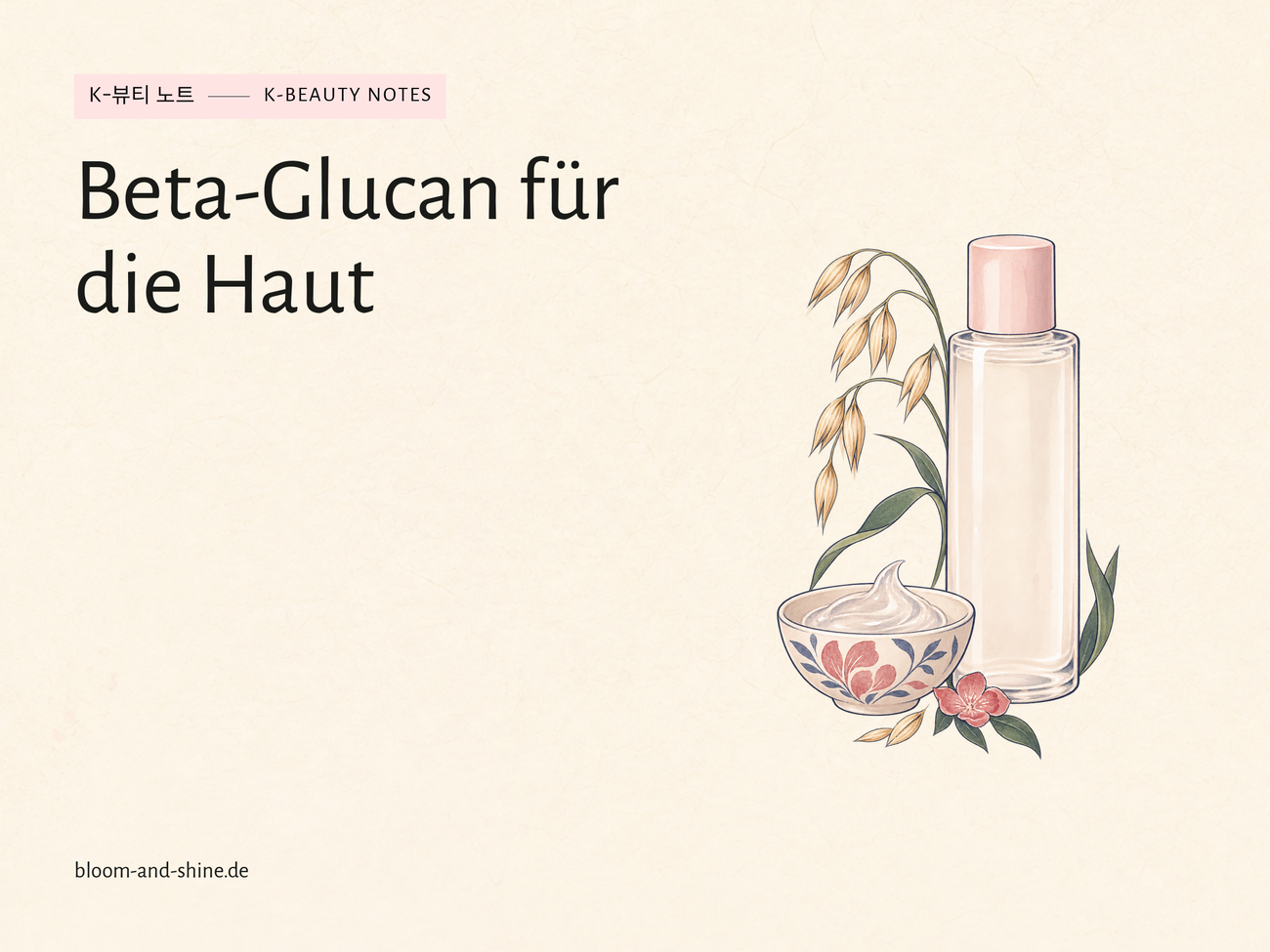
Beta-glucan for the skin: What can the ingredient do?
Beta-glucan can be in a toner that says something completely different on the front. It’s exactly the same with the Isntree Hyaluronic Acid Toner: hyaluronic acid gets the big name, beta-glucan gets a place in the ingredients list.
This is a good starting point to get to know the ingredient. It doesn’t have to be the main star on the pack to be worth a look. And you don’t need a separate serum for every interesting name.
A name for linked sugar building blocks
Beta-glucans are polysaccharides, i.e. long compounds made up of many sugar building blocks. In this case, they are glucose building blocks that can be linked to each other in different ways. The safety report of the Cosmetic Ingredient Review on microbial polysaccharides describes these structures and lists beta-glucan, among other things, as a skin-care cosmetic ingredient.
For you this means: The word beta-glucan does not yet describe a complete recipe. Even related names such as Hydrolyzed Beta-Glucan do not simply refer to the same ingredient in a nicer spelling. Such modified forms are listed separately in the report mentioned.
You will find beta-glucan in thin toners as well as in rich creams. If you like light layers, the discovery starts with the toner; For a more nourishing feeling, a cream is the more obvious form.
What research says about moisture
Beta-glucan is used in moisturizing products. There are also smaller studies on formulations with related glucan components. A randomized, blinded study with 13 participants looked at a chitin-glucan complex , i.e. a compound of chitin and beta-glucan, for six weeks. Improvements in moisture in the stratum corneum were described. The original work by Gautier and colleagues explains the complex examined.
This is a hint for these specific formulations. However, a chitin-glucan complex is not the same as every raw material called beta-glucan. From the small study, neither an effect for all beta-glucan products nor an advantage over hyaluronic acid can be derived. The Isntree toner was also not examined there.
For big sentences like “much more effective than hyaluronic acid” we need a suitable direct comparison. A general superiority cannot be justified from the sources used here. That’s why you won’t find any rankings with impressive percentages here.
Beta-glucan and hyaluronic acid can go together
When you’re looking for moisturizer, “either beta-glucan or hyaluronic acid” is often not a practical choice. Both can be used together in a recipe. The Hyaluronic Acid Toner from Isntree shows this immediately: its list of ingredients contains beta-glucan and several forms of hyaluronic acid.
Therefore, first consider what type of care you want. You may be missing a light, liquid layer after cleaning. Maybe you want to be ready as quickly as possible in the morning and would rather grab the cream straight away. The ingredient name alone does not determine which process suits you.
If you already tolerate hyaluronic acid well, you don’t have to replace it because of a new care term. And if a previous hyaluronic product was unpleasant, that doesn’t say which of its components was responsible. Our notes on hyaluronic acid for the skin explain its cosmetic use in more detail.
A toner that contains both
The Isntree Hyaluronic Acid Toner 200 ml also contains glycerin, panthenol and sodium PCA. Beta-glucan is one of several ingredients. How much of it is contained and from which source it comes for this recipe is not clear from the tested product information.
The shop instructions recommend using it after cleaning: Spread an appropriate amount with your hands or a cotton pad and pat in gently. When deciding between hands and pad, you can simply decide which is more comfortable for you. The rest of the usual care follows afterwards.
You don’t have to make this a layered toner routine. Start using according to the package directions and see if you even like that extra texture. A cream that you are already comfortable with doesn’t necessarily need a toner underneath.
How you can make your selection
In the Beta-Glucan collection you will find care with this moisture binder. The Isntree toner presented here can be tried before your usual cream – an easy start if you want to give your skin more moisture after washing.
If your skin burns frequently or is persistently irritated, the cause should be clarified before the next product is added. Moisturizing can also trigger an individual reaction; DermNet describes this for moisturizers and other nourishing formulations . The article about the skin barrier in cases of tightness and burning helps with classification.
To help you choose according to your actual concerns, there is also our guide to ingredients in K-Beauty. Beta-glucan has its place there alongside other care ingredients. Whether it gets its own place on your sink depends on the finished care.
What we know for sure
- Beta-glucan consists of linked glucose building blocks and is used cosmetically as a skin-care ingredient.
- Studies on specific glucan formulations cannot be transferred to every product.
- A general superiority over hyaluronic acid is not proven by the sources examined here.
- According to the current list of ingredients, the Isntree toner contains beta-glucan and forms of hyaluronic acid together.
Sources
- Cosmetic Ingredient Review: Safety Assessment of Microbial Polysaccharide Gums
- Gautier et al.: Chitin-glucan in cosmetic formulations, 2008
- Isntree: Hyaluronic Acid Toner, complete list of ingredients and application
- DermNet: Emollients and moisturizers
Product information and specialist sources checked on September 8, 2026. The following applies to the specific product the label on your package.