Is Korean skincare really that good?
A crucible does not become better just because the departure point on its journey to Germany was Seoul. Korean skincare can be very good. But their origin is not proof of effectiveness. K-Beauty is...

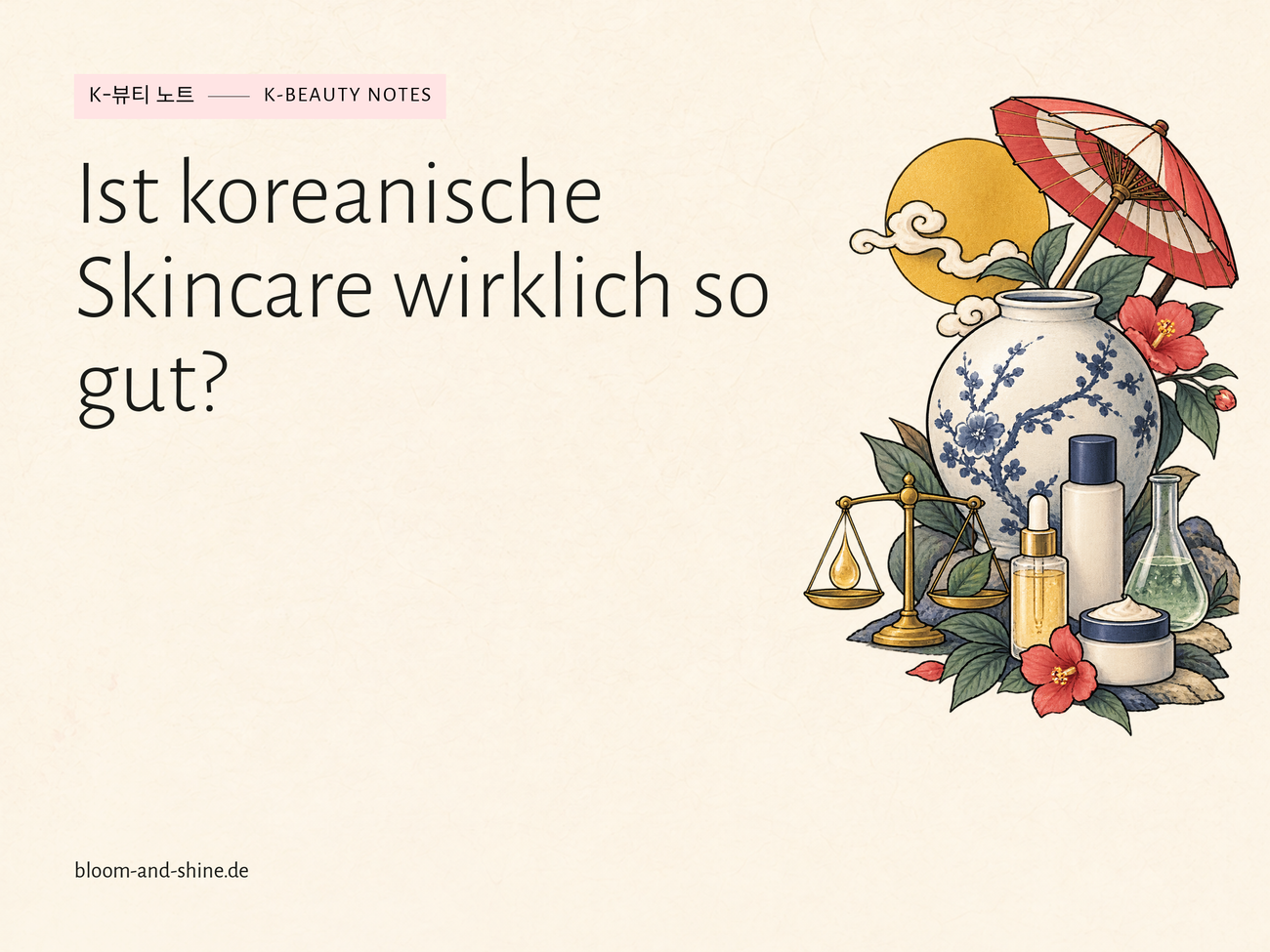
Is Korean skincare really that good?
A crucible doesn’t get better just because the departure point on its journey to Germany was Seoul.
Korean skincare can be very good . But their origin is not proof of effectiveness. K-Beauty is not a single formula, but a large market with good, mediocre and unsuitable products – like everywhere else.
Why K-Beauty is so popular
Many people like the light textures, the large selection of toners, essences and sun protection products and the pleasant feeling when applying. Good formulations make consistent use easier. That’s a real advantage, even if it can’t be shown in a spectacular before-and-after picture.
The Korean term functional cosmetics is also interesting. The Korean Food and Drug Administration (MFDS) has regulated categories for this, including for UV protection and products that are supposed to help improve wrinkles. Depending on the product, an official test or report with documents on safety and function is required.
This does not mean that every Korean product has been tested like a medicine – or is automatically better than a European one.
How to recognize a good product
A good product suits the skin condition, serves a clear purpose and is tolerated. His advertising claims should match the wording and the existing evidence.
The European requirements also apply to cosmetics that are regularly sold in the EU: These include a responsible person and a safety assessment before they are placed on the market. You should therefore take a closer look at direct imports from shops outside the EU.
So the more useful question is not: “Is K-beauty good?” But: Is this product good for this skin?
What we know for sure
- “Korean skincare” refers to an origin and product culture, not a uniform quality level.
- The Korean MFDS regulates certain functional cosmetics, including products for UV protection and wrinkle improvement.
- Cosmetics are not approved according to the same standards as pharmaceuticals. Even a functional cosmetic product remains cosmetic.
- Products that are regularly marketed in the EU require a responsible person and a safety assessment, regardless of the country of origin.
- Compatibility, formulation and appropriate application are more important than the country of origin on the packaging.