How can I check if my cosmetics are authentic?
Packaging different, smell unusual or batch code unclear? Lee shows you seven useful test steps - and explains what codes and apps really prove.

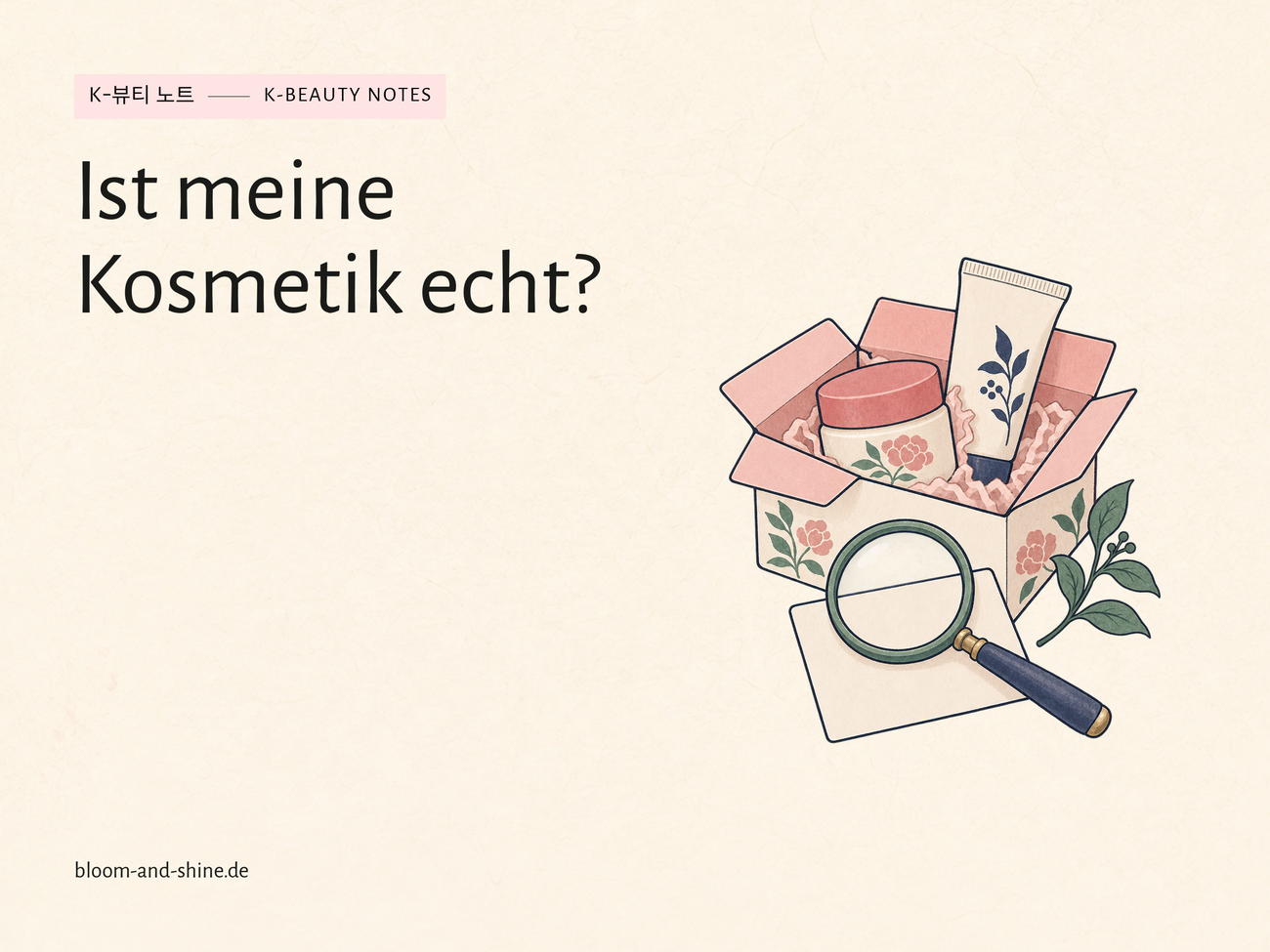
How can I check if my cosmetics are authentic?
You are holding a new serum in your hand and something seems different than last time: the box has a new color, the code is in a different place or the cream smells unusual. That may make you suspicious. But it’s not proof of a counterfeit, because brands keep changing recipes, packaging and printing processes.
The safest approach is not a single trick, but rather a small all-round look: Where does the product come from, what information does it contain, do the packaging and contents match and can an ambiguity be clarified in a comprehensible way?
The most important step begins with purchasing
Buy from a provider whose company, address and contact are clearly visible. Keep the invoice and order confirmation. When it comes to marketplaces, it’s worth taking a second look: Who is actually the seller there?
We carefully select our procurement channels and are available to you as a contact person even after the purchase. If you are confused about something about a product you purchased from Bloom & Shine, send us photos of the front and back, outer box, batch code and your order details via Ask Thu . Personal order data does not belong in a public comment.
Seven things you can check for yourself
1. Spelling, logo and print quality
Typos in the brand name, blurry logos, crooked labels or unusually incorrect instructions are warning signs. Compare with the brand’s current official product representation, not just an old photo from an image search. A new pack, an import sticker or small color differences can be part of a regular change.
2. Material, smell, color and texture
If the packaging feels noticeably cheap, a seal is damaged or the product smells pungently different than expected, pause use. A changed smell or separate texture can also occur due to age, heat, frost or incorrect storage. Don’t try a questionable product on your skin to test its authenticity.
3. Holograms, QR codes and security features
Some brands offer their own QR codes, serial numbers or holograms. Only use the testing instructions, which you can find on the brand’s official website or official customer service. A QR code alone is not proof of authenticity: a printed code can also be copied.
4. Mandatory information for cosmetics in the EU
For cosmetics on the EU market, according to Article 19 of the EU Cosmetics Regulation, the following information is generally included in the labeling:
- Name and address of the responsible person in the EU,
- Nominal content,
- Minimum shelf life or – if the shelf life is long enough – the period of use after opening,
- special precautionary measures, if necessary,
- batch number or a reference for identification,
- intended use if it is not already clear from the packaging,
- complete list of ingredients in INCI notation.
For imported cosmetics, the country of origin is also indicated. Not every piece of information has to appear twice on the container and outer box: there are exceptions for small products and individual information; The list of ingredients can be on the packaging, for example. If central information is missing without a clear explanation, ask the dealer.
The BVL explains the labeling of cosmetics clearly. If you would like to read an INCI list better, our tool Understanding Ingredients will also help you.
5. Read the best-before date and open jar correctly
If an unopened cosmetic product has a maximum shelf life of 30 months, it needs a best-before date – often together with an hourglass or the words “Best before”. If more than 30 months, the duration of use after opening is usually stated on the package. The open jar symbol with 12M means: Use for twelve months after first opening.
A missing specific date is therefore not automatically suspicious for a product with a 12M or 24M symbol. Write the opening date in small letters on the floor; This is more helpful in everyday life than any app.
6. View the batch code on the container and outer box
If the tube, bottle and box each have a code, you can compare them with each other. Completely implausible or contradictory information is a good reason to ask. However, a code does not have to be embossed: laser, ink and other printing methods can be regular. Even different codes are not automatically proof of forgery, for example if packaging components are manufactured or marked separately.
7. Do not overestimate special information
For sun protection you will find information on SPF and UVA protection; For scents containing alcohol, additional safety instructions may be necessary depending on the classification and packaging. Seals such as COSMOS ORGANIC or COSMOS NATURAL are part of a voluntary certification and come with their own labeling rules. Terms such as “for sensitive skin”, on the other hand, are not an official seal of approval and do not in themselves prove a specific test.
What is a cosmetic batch number?
The batch number – also called batch code or lot code – assigns a product to a manufacturing batch. The manufacturer can use it to organize production and traceability. The code is not the same as EAN barcode, article number, color or order number.
A batch number does not follow a uniform pattern for all brands. It can consist of numbers only or letters and numbers. And it is not a public certificate of authenticity: a plausible code can be copied, an unknown code can simply come from a new format.
How to find the batch number on cosmetics
Look here one after the other:
- on the bottom or the bottom flap of the outer carton,
- under the jar or bottle,
- on the tube fold,
- on the label edge, lid or pump collar.
Side lighting and a zoomed photo make faint laser or embossed prints easier to read. Copy all characters exactly, including leading zeros. At least keep the box until you have used the product a few times.
What LotDate and CheckFresh do – and what they don’t
LotDate and CheckFresh try to derive a production date from brand-specific batch codes. This can help you classify the product age. However, the databases are not official, formats can change and not every brand or batch is recognized.
A hit confirms neither authenticity nor security. A missing hit also does not prove a forgery. Priority is given to a printed best-before date, the PAO symbol, storage, condition and, in case of doubt, information from the retailer or brand.
A small checklist for suspected cases
- Do not continue to use the product for the time being.
- Photograph the front, back, seal, INCI list and batch code.
- Secure invoice and seller.
- Compare with the current official product page.
- Ask the dealer specifically for clarification.
- If necessary, write to the brand via an official contact you have called yourself.
If mandatory information is missing or there is a security problem, the responsible local surveillance authority can also help. A single discrepant detail is not enough to make a public claim of forgery.
Why a trustworthy dealer is worth more than a single code
You should enjoy your care and not have to do detective work at home. A comprehensible retailer can explain where the goods come from, which variant was delivered and what happens if something unusual occurs. It is precisely this accessibility that makes the difference in case of doubt.
If you want to discover new K-Beauty, check out our post Which Korean skincare brand is right for you? a calm orientation. And when it comes to a product from your Bloom & Shine order, Ask Thu is the direct route to us.