Acne – what K-Beauty can do and where medicine begins
Acne asks loud questions. What helps immediately? What has the strongest effect? And which product will end it forever?The skin answers more quietly: There is no treatment that works for all people...

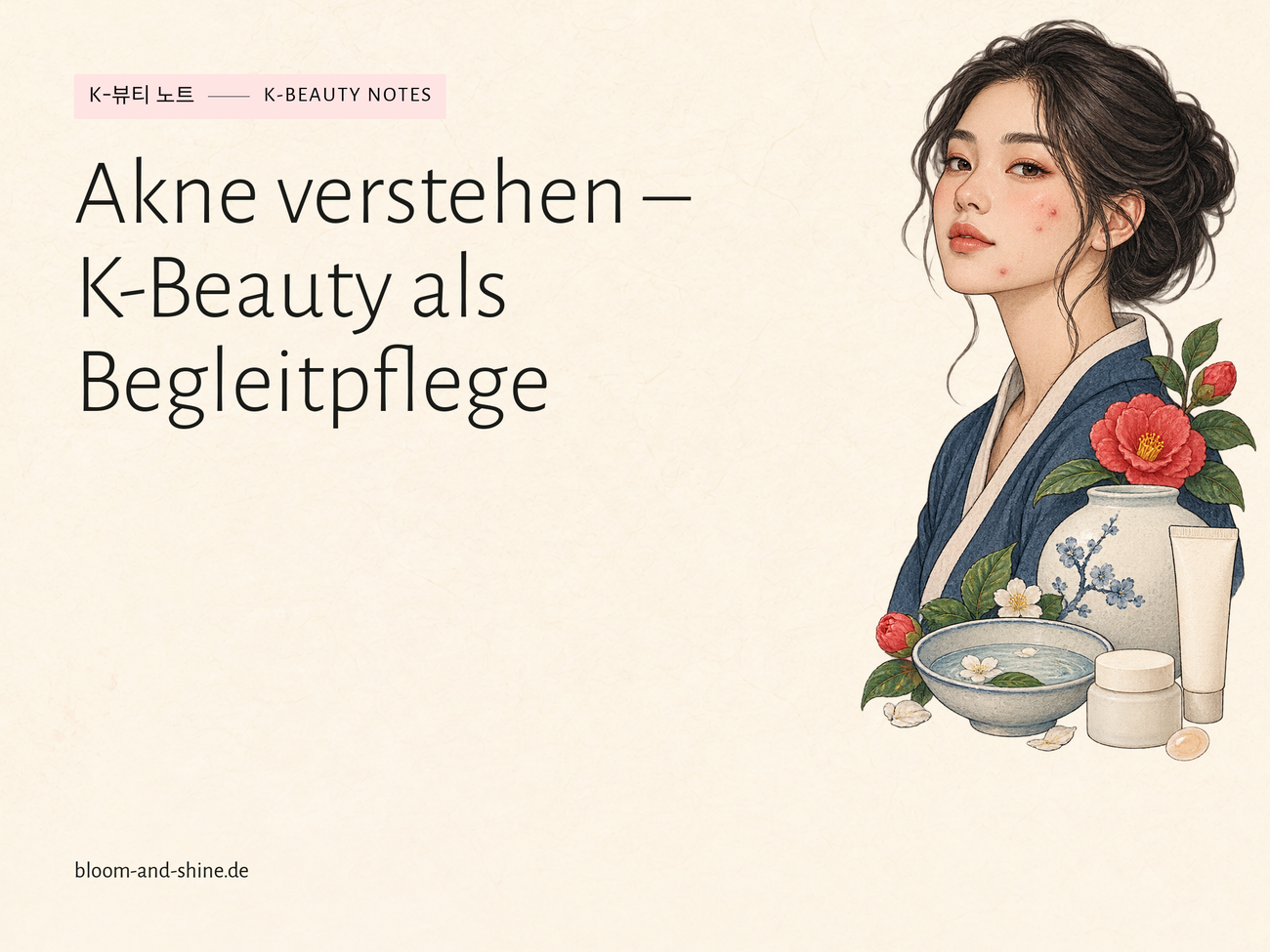
Acne – what K-Beauty can do and where medicine begins
Acne asks loud questions. What helps immediately? What has the strongest effect? And which product ends them forever?
The skin responds more quietly: There is no treatment that works 100 percent for everyone. Acne can often be significantly improved and sometimes calmed down over a long period of time. Which therapy is suitable depends on the form, the severity, the risk of scarring and the individual person.
K-Beauty can be a good companion. It can gently cleanse, provide moisture, protect the skin from UV radiation and make medical therapy more tolerable. However, it cannot safely cure acne, cannot regulate the hormonal cause and cannot replace a dermatologist’s office.
Medical note: Acne is an inflammatory skin disease. This article provides general information and does not replace diagnosis or personal treatment. Medicines are only mentioned for classification purposes. Do not start, combine or stop without medical or pharmaceutical advice. Special rules apply during pregnancy, breastfeeding or if you want to have children.
Acne is not unwashed skin
A pimple doesn’t appear because someone didn’t scrub their face thoroughly enough. In acne, several processes intertwine:
- Horny cells collect at the exit of a sebaceous gland follicle. The canal can become blocked and a blackhead, medically comedo , develop.
- The sebaceous gland produces sebum. Hormones and the individual sensitivity of the gland can play a role.
- The natural skin bacterium Cutibacterium acnes is involved in the processes in the blocked follicle.
- The immune system reacts. An initially invisible microcomedo can turn into red papules, pustules or deep nodules.
More washing will not loosen this chain. Cleansing, rubbing and rough peeling too often can further irritate the skin. Acne skin is also not automatically very oily or particularly robust. It can be shiny, tense and sensitive at the same time.
Not every pimple is the same acne
Dermatologists differentiate primarily according to the visible changes and their severity:
- Acne comedonica: open and closed blackheads are in the foreground.
- Acne papulopustulosa: inflammatory red nodules and pustules appear.
- Acne conglobata: deep, painful nodules, abscesses, or cysts may occur. The risk of scarring is high.
- Acne tarda: Acne begins again after the age of 25 or persists beyond that. Women are often affected; Changes often occur in the lower third of the face, on the jaw, chin or neck.
A single blemish after an occlusive cream is not chronic acne. And small light spots on the nose can be normal sebaceous threads , not closed blackheads.
Rosacea, perioral dermatitis or folliculitis can also look similar. That’s why a diagnosis is particularly important if the finding is new, severely inflamed or unusual.
What helps 100 percent against acne?
Nothing helps everyone 100 percent of the time. This is not an evasive answer, but the medically honest one.
Acne can look different, have different triggers and can recur after successful therapy. A serious goal is therefore not the promise of eternal, poreless skin. There is a significant reduction in new lesions, as few scars as possible, fewer pigment changes and a better quality of life.
Many therapies require several weeks. This does not mean that you should patiently accept pain, new scars, or deterioration. The Korean health authority KDCA recommends having the strategy checked by a specialist if consistent treatment does not noticeably improve after around six to eight weeks. The German guidelines also assess the course at fixed control intervals.
Promises such as “guaranteed clear skin”, “acne cured in four weeks” or “works for everyone” are a warning signal – regardless of whether they are written on a jar, in a reel or on a treatment page.
What is the strongest remedy for acne?
There is no universally “strongest” remedy. The strongest, sensible therapy is the one whose benefits match the clinical picture and whose risks are justifiable.
For severe, scarring acne or acne that does not respond adequately to appropriate standard therapies , oral isotretinoin is a particularly effective medical option. The current German S2k guidelines describe it as often more effective for severe acne and more likely to lead to remission than the compared antibiotic and local therapies. However, it is not a beauty ingredient, not a remedy for every impurity and not a recommendation for self-treatment.
Isotretinoin is prescribed and monitored by a doctor. Among other things, it can severely dry out the skin and lips and change laboratory values. Before and during treatment, personal risks are discussed and checks are carried out depending on the situation.
Particularly important: Isotretinoin can cause serious harm to an unborn child. It must not be taken during pregnancy or breastfeeding. A strict pregnancy prevention program and regular check-ups apply to patients who can become pregnant. Retinoids applied externally should not be used if you are already or planned to be pregnant.
“Particularly effective” does not mean “best for everyone”. Such systemic therapy would often not be appropriate for mild acne. Strength without appropriate indication is not progress.
Can a beautician help with acne?
Yes, supportive – but not as a replacement for dermatology.
A qualified medical-cosmetic specialist can advise on a mild care routine and carry out a professional cleansing. Hygienic, professional removal can be a useful addition, especially for open or closed blackheads. Accompanying dry, tight skin during acne therapy can also be helpful.
The boundaries are just as important:
- A beautician does not make the medical diagnosis instead of a doctor.
- Prescription medicines belong in the hands of a doctor.
- Deep, painful nodules, cysts, severe inflammation and incipient scars are not expressed vigorously.
- Aggressive peels, microneedling or other irritating procedures are not harmless standard care for active inflammatory acne.
Good collaboration is silent and clear: dermatology treats the disease. Cosmetics can provide appropriate accompanying care and professional cleaning within the scope of their qualifications.
What do dermatologists recommend against acne?
Not a single miracle cure, but a therapy according to findings and severity . The current German S2k guidelines therefore differentiate between blackheads, inflammatory lesions, deep nodules, expansion, scar risk and personal stress.
Especially blackheads, mild acne
- Typical medical route: Topical medications such as retinoids, benzoyl peroxide or azelaic acid can be considered.
- Role of K-Beauty: gently cleanse, replenish moisture and use UV protection.
Inflammatory papules and pustules
- Typical medical route: External active ingredients are often combined with different points of attack.
- Role of K-Beauty: Do not respond to irritation with ever new acids; keep the routine simple.
Moderate to severe inflammatory acne
- Typical medical route: In addition, an oral antibiotic may be necessary for a limited time.
- Role of K-Beauty: accompany therapy-related dryness; do not promise any cosmetic replacement treatment.
Deep nodules, cysts, risk of scarring or resistance to therapy
- Typical medical route: early dermatological treatment; Depending on the findings, isotretinoin may be considered.
- Role of K-Beauty: only supportive cleansing, moisture and UV protection after consultation.
Adult acne with hormonal indications
- Typical medical route: dermatological classification, if necessary collaboration with gynecology or endocrinology.
- Role of K-Beauty: does not claim any effect on hormones.
Antibiotics are not a permanent solution. The guideline recommends that systemic antibiotics not be used alone but together with appropriate external therapy and for as short a period as possible – typically up to around three months. This is intended to limit side effects and antibiotic resistance.
Which option is suitable in individual cases cannot be determined from a blog article. Pregnancy, breastfeeding, age, comorbidities, other medications and psychological stress change the decision.
Why can acne occur during menopause?
Acne can begin again in midlife or persist from earlier years. During menopause, hormonal signals change. Falling estrogen levels can promote the relative influence of androgens on sensitive sebaceous glands. This is a possible explanation, but not an automatic cause of every impurity.
Cosmetics, certain medications, stress and long-standing adult acne can also be involved. Many women with acne tarda do not have detectably elevated androgen levels. And the location on the chin alone does not prove hormonal acne.
Newly occurring or rapidly severe acne should be diagnosed by a doctor – especially together with:
- new or significantly increased facial hair,
- noticeable loss of scalp hair,
- cycle changes in the perimenopause,
- a deepening voice or other signs of masculinization,
- new medications or hormone applications.
There is usually no rare tumor behind such signs. They are still a good reason not only to change the next serum, but also to have the cause clarified professionally.
How do I get rid of hormonal acne?
The first step is not a hormone serum. The question is whether acne is actually hormonally influenced.
Chin and jaw pimples, cyclical flare-ups, or adult onset may be clues. They alone are not enough for a diagnosis. A dermatological examination and a detailed anamnesis are helpful: When did the acne start? Is there a connection to the cycle? Have contraceptives been started or stopped? Which medications and nutritional supplements are taken? Are there other hormonal signs?
The basic external therapy is initially selected in a similar way to other acne. For suitable patients, doctors can also consider antiandrogenic combined contraceptives or spironolactone .
Clear limits apply:
- Spironolactone is used in Europe for acne off-label , i.e. outside of the approved indication.
- Spironolactone is contraindicated during pregnancy and breastfeeding.
- Combined contraceptives are not a harmless “skin pill”. Among other things, the risk of thrombosis, migraines, smoking and other personal factors must be checked.
- Hormonal therapies take time and do not work the same for every person.
- K-Beauty neither regulates androgens nor a disease such as polycystic ovary syndrome, or PCOS for short.
If there is clinical or laboratory evidence of hormonal influences, the German guidelines recommend an interdisciplinary assessment and appropriate medical options. The treatment plan then belongs between the patient, dermatology and, if necessary, gynecology or endocrinology – not between the comment column and the shopping cart.
What K-Beauty can really do for acne
Korean skincare is particularly good at turning unspectacular steps into a reliable ritual. This is exactly what is valuable for acne: don’t apply as much as possible, but disturb as little as possible.
The Korean Medicines and Cosmetics Agency MFDS itself draws a clear line. Cosmetics to accompany acne-prone skin are not medicines and should not be equated with a guaranteed acne treatment. The Korean state health information agency KDCA also recommends gentle cleaning, light care, UV protection and patience – in addition to medical therapy appropriate to the severity.
K-Beauty can:
- remove dirt, make-up and sun protection with little irritation,
- add moisture and relieve feelings of tension during drying therapies,
- accompany the skin barrier with a suitable cream,
- with daily UV protection help prevent post-inflammatory discoloration,
- cover a single superficial area with a hydrocolloid patch and make it difficult to touch,
- make a simple routine comfortable enough to maintain consistently.
K-Beauty cannot:
- guaranteed to cure acne or hormonal acne,
- “balance” hormones,
- extract deep lumps or cysts,
- prescription retinoids, benzoyl peroxide, Replace antibiotics or isotretinoin,
- remove existing deep acne scars with a cream.
Even well-known K-Beauty ingredients such as Centella, Heartleaf, Mugwort, propolis, ferments or snail secretion are not part of the standard medical treatments for acne. They can be components of a pleasantly nourishing formulation. However, the reputation of a single substance does not mean that the finished product has a proven effect on acne.
Salicylic acid and niacinamide: accompanying, not replacement therapy
The German guidelines name salicylic acid and niacinamide as possible components of dermatocosmetic accompanying care. This is a useful note, but it is not a license for every product with these names.
The final formulation, concentration, contact time and individual tolerance are crucial. A wash-off cleanser is different than a leave-on peel. A high concentration niacinamide serum is not automatically better than a plain cream with a moderate amount.
Anyone who already uses a medical retinoid, benzoyl peroxide or azelaic acid should not add several acids and spot treatments on their own. Burning, flaking and redness are not evidence that a product is working particularly well. They can be signs of over-irritated skin.
A calm routine for acne
The sequence of medical therapy is always based on the doctor’s instructions. The care around it can remain simple.
In the morning
- Cleanse gently. A soap-free, rather acidic washing emulsion and lukewarm water are sufficient. Do not scrub or use a cleaning brush.
- Moisture as needed. If you have tightness or dryness, use a light, if possible non-comedogenic care product. “Non-comedogenic” is a guideline, not a guarantee of tolerability.
- Apply UV protection. The German guidelines recommend appropriate sun protection with SPF 50 or 50+ every day, especially to prevent dark spots after inflammation.
In the evening
- Remove sunscreen and make-up completely but gently. Double cleansing only makes sense if a single mild cleanser is not enough and the skin can tolerate the second step.
- Apply medical therapy as directed. No more and no more often than agreed.
- Replenish moisture. If the treatment dries out, simple light care can help. Whether it is used before or after the medicine depends on the preparation and the doctor’s recommendation.
If you do not use any prescribed therapy and only have occasional blemishes, add at most one new cosmetic active ingredient. Only when the routine has been stable for a few weeks can it be assessed whether it is beneficial or irritating.
Acne skin no longer needs more steps. It requires less friction, fewer simultaneous experiments and more time.
What you can do better
- Squeeze out pimples, lumps or blackheads with fingers or tools.
- Wash, rub or use coarse scrubs several times a day.
- Restart BHA, AHA, retinol, benzoyl peroxide and other spot treatments at the same time.
- Treat an inflammatory flare-up with microneedling or aggressive home applications.
- Use the sun or solarium as an acne treatment.
- Change the entire routine every week.
- Take high doses of zinc, vitamin A or other dietary supplements without professional testing.
- Eliminate milk, gluten or entire food groups simply because of a social media tip.
Diet can influence the course in some people. The current guidelines primarily name a high glycemic load, highly processed foods and whey products as possible individual triggers. This does not justify apportioning blame or a radical ban list. It makes more sense to have a balanced diet, honest observation and, if major changes are made, qualified nutritional advice.
When you shouldn’t wait for the next product
Make an appointment early at a dermatologist’s office for:
- deep, painful lumps or cysts,
- first or existing scars,
- large areas of acne on the face, chest or Back,
- sudden onset of severe adult acne,
- unclear skin condition or suspicion of rosacea, perioral dermatitis or folliculitis,
- severe dark discoloration after inflammation,
- lack of significant improvement despite consistent treatment,
- pregnancy, breastfeeding or Desire to have children,
- possible accompanying hormonal symptoms,
- severe mental stress, withdrawal or depressive thoughts.
Acne is visible. Their burden often remains invisible. Anyone who suffers from it does not have to reach a certain level of severity to deserve help.
How to prepare for a good doctor’s consultation
A small documentation is more helpful than a large product bag:
- Photograph the skin every one to two weeks in similar light, not daily.
- Note the onset, fluctuations, pain and affected parts of the body.
- If necessary, record a possible reference to the cycle, stress or medication.
- Write down all the care products, medicines and nutritional supplements used.
- Note what has been used, for how long, and how the skin reacted.
- Say openly how much the acne bothers you in everyday life or emotionally.
This turns “I’ve tried everything” into information that can be worked with.
Briefly summarized
- What helps 100 percent? No remedy is guaranteed to work for everyone. However, appropriate therapy can often significantly control acne.
- What is the strongest remedy? For severe or scarring acne, oral isotretinoin is particularly effective, but due to the considerable risks it should only be used by a doctor.
- Can a beautician help? Yes, with appropriate accompanying care and professional cleaning – not as a replacement for diagnosis and medical therapy.
- What do dermatologists recommend? A step-by-step therapy depending on type, severity, extent, scar risk and personal situation.
- Why acne during menopause? Altered hormonal signals may be involved, but do not explain every new pimple. Other skin diseases and triggers must be taken into account.
- How does hormonal acne go away? First classify, then treat specifically. Medical hormonal options may be useful for appropriate patients; Cosmetics do not regulate hormones.
- What can K-Beauty do? Gently cleanse, provide moisture and UV protection, reduce touching and support the tolerability of therapy.
Lee’s fact note
- Acne is a chronic inflammatory disease of the sebaceous gland follicle and is not a result of poor cleanliness.
- Blackheads, inflammatory papules and pustules, and deep nodules do not require the same treatment.
- The current German S2k guideline “Therapy of Acne” is version 3.0, as of August 2026. It is not an S3 guideline.
- Systemic antibiotics should not be used alone and for as short a period as possible, typically up to about three months.
- Isotretinoin is a particularly effective medical option for certain severe cases. It is highly teratogenic and is subject to strict safety regulations.
- Acne tarda begins again after the age of 25 or persists beyond that. The position on the chin does not prove a hormonal cause.
- Professional cleansing and dermatocosmetics can complement therapy. Expressing yourself increases the risk of more severe inflammation and scarring.
- Cosmetic salicylic acid or niacinamide can be suitable as accompanying care. One ingredient alone does not make a product an acne medicine.
- Gentle cleansing, light moisturizing and daily UV protection are the calm basis. Ten steps is not a medical category.
Cosmetic accompanying care from our shop
The following products represent four care tasks: cleaning, moisturizing, UV protection and covering a single area. They are not medicines, do not treat hormonal causes and do not replace dermatological therapy. If your skin feels dry, start with the skincare step you need right now, such as a moisturizer.
- Beauty of Joseon Green Plum Refreshing Cleanser – a water-based cleansing step; Your own skin decides whether it is mild enough.
- Dr. Althea 345 Relief Cream – a light moisturizer with, among other things, glycerin, panthenol and ceramide NP.
- SKIN1004 Madagascar Centella Hyalu-Cica Water-Fit Sun Serum SPF 50+ PA++++ – a possible daily sun protection step.
- COSRX Clear Fit Master Patch – a hydrocolloid patch that covers a single superficial area. It does not reach deep acne and does not guarantee faster healing or freedom from scars.
View further K-Beauty accompanying care for acne-prone skin
Sources
- AWMF: S2k guideline “Therapy of Acne”, version 3.0, as of August 2026
- German Dermatological Society: Classification of the updated acne guidelines
- Gesundheitinformation.de / IQWiG: Acne – ointments, tablets and light treatment
- Gesundheitinformation.de / IQWiG: Skincare for acne
- BfArM: patient information on isotretinoin and pregnancy
- Korea Disease Control and Prevention Agency: state health information on acne
- Korean Ministry of Food and Drug Safety: border between Acne cosmetics and medicines
- Korean Dermatological Association: Acne
- Korean Dermatological Association: Adult acne
- NICE: Acne vulgaris – management and referral criteria
- PubMed: Network meta-analysis of drug-based acne therapies
- PubMed: Review of adult acne during and after menopause
- European Medicines Agency: Safety measures for retinoids in pregnancy