TECA, Cica and Madecassoside: What’s the difference?
Three names, one plant – but different meanings. This is how you understand TECA, Cica and Madecassoside in your care.

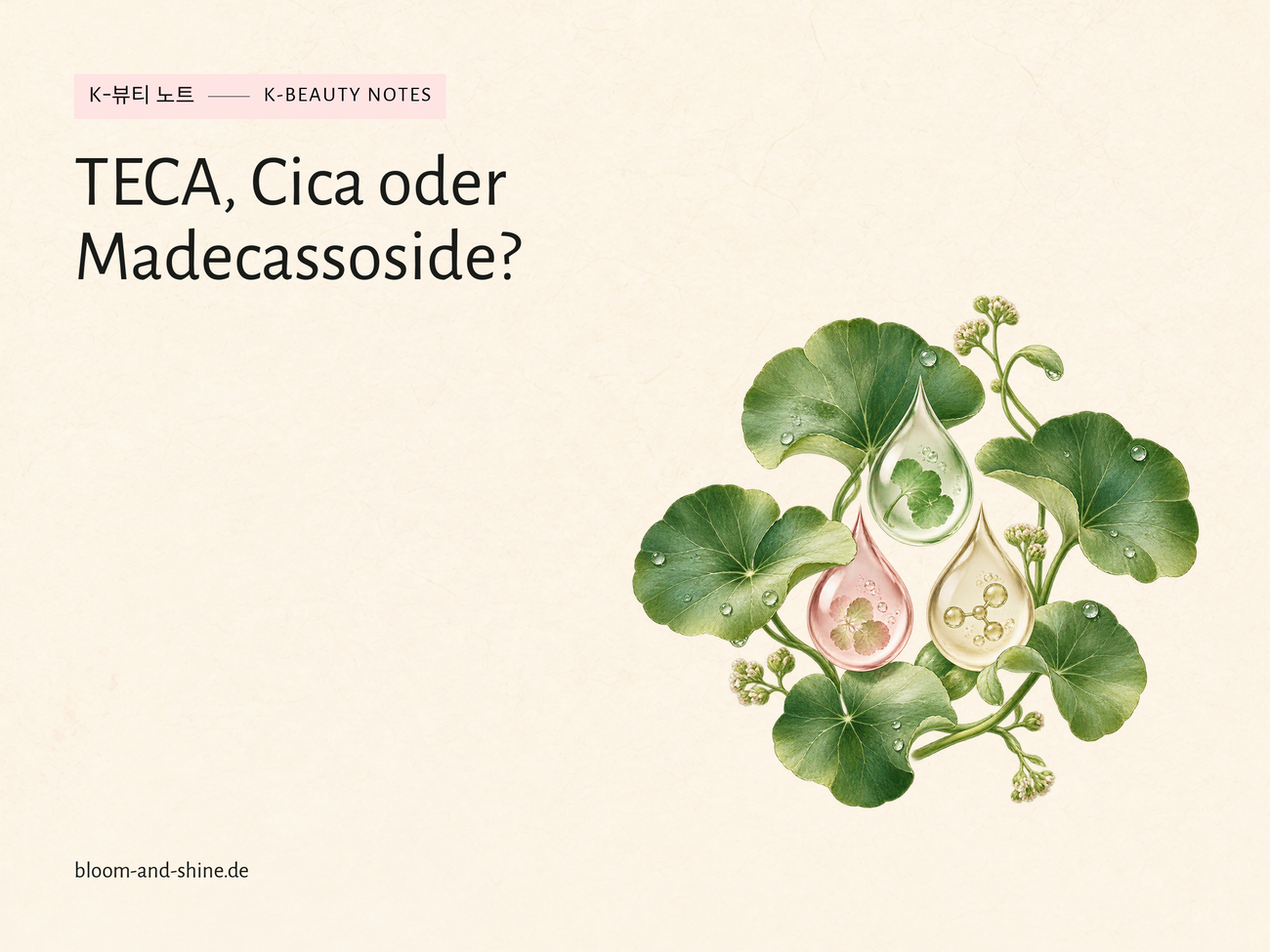
TECA, Cica and Madecassoside: What’s the difference?
Centella Asiatica, Cica, Madecassoside and now also TECA: At first glance, these terms seem like four names for the same ingredient. They actually belong together, but are not interchangeable.
Cica is the big collective term
“Cica” is a cosmetic name that usually refers to Centella Asiatica. The list of ingredients may include, for example, Centella Asiatica Extract , leaf water or another plant extract. The word Cica on the front does not say how much of it is contained or how the extract was produced.
Madecassoside is a single component
Madecassoside is one of the substances known from Centella Asiatica. It can appear separately in the INCI list. You can find out more about this in our brief information about Madecassoside.
TECA refers to a standardized extract
TECA stands for Titrated Extract of Centella Asiatica . Manufacturers use this to describe a purified, standardized extract with certain Centella components, often Asiaticoside, Madecassic Acid and Asiatic Acid. Statements that TECA is fundamentally “stronger” or penetrates “deeper” are initially manufacturer advertising and not proof of any finished product.
The SKIN1004 Madagascar Centella TECA Cream is a concrete example. If you are looking for a more liquid texture, you will find a different product form with the SKIN1004 Centella TECA Ampoule . First decide whether you are missing a cream or ampoule from your routine.
Which variant suits you?
Sensitive skin does not respond to marketing terms, but to the full recipe. Check fragrance, texture and all other active ingredients. If you already tolerate Centella well, you don’t need to replace it just because TECA sounds newer. Our overview Centella Asiatica and Cica explains the basis; You can look up individual names using Understanding ingredients .
Your Bloom & Shine world
Would you like to take your knowledge to the next step? Use the skin type test , put together a small routine with the Quick-K routine or ask about Ask Thu personally.