Mineral or chemical sunscreen: which differences count?
Mineral and organic UV filters explained: What role whitening, texture and the entire recipe play when choosing your sunscreen.

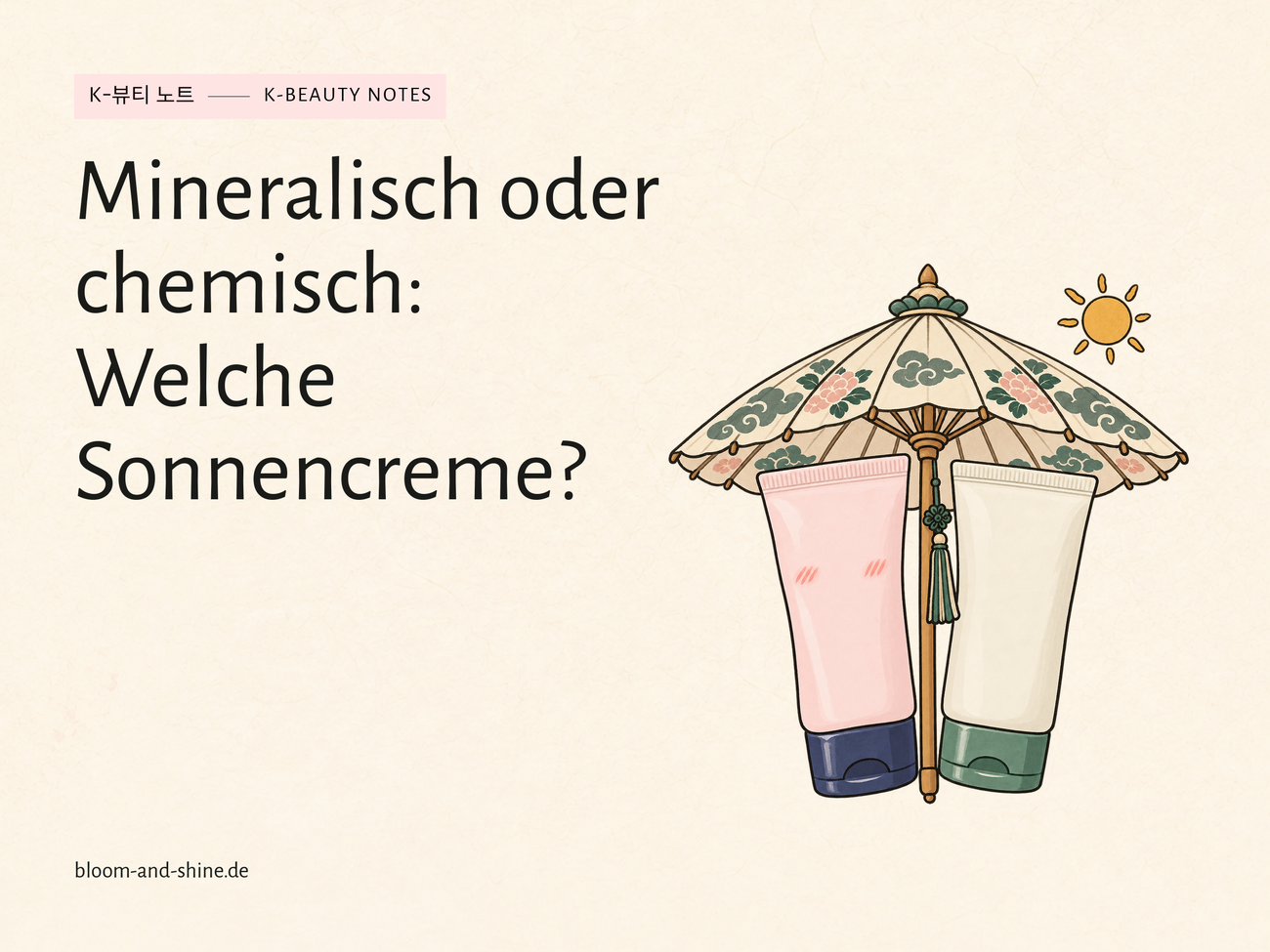
Mineral or chemical sunscreen: which differences count?
One sunscreen leaves a light glow, the other disappears almost invisibly on the skin. Both have SPF 50+ on the tube. When looking for an explanation you will come across “mineral”, “chemical” and sometimes “hybrid”. Which of these pieces of information really helps when shopping?
The filter group is a good place to start. Your decision also depends on the texture, the visible application and the tolerability. Ultimately, sunscreen should be comfortable to wear in the necessary amount.
What differentiates mineral and chemical UV filters
Mineral filters mean zinc oxide and titanium dioxide. In the list of ingredients they are listed as Zinc Oxide and Titanium Dioxide. The second large group are organic UV filters, usually called “chemical filters” in the trade. “Organic” is a chemical term here and says nothing about organic cultivation.
Mineral sunscreen also consists of chemical substances. The term “chemical-free” therefore doesn’t help. There are also recipes that combine both filter groups; they are often referred to as hybrid sunscreens.
You often read that mineral filters reflect UV radiation like a mirror, while organic filters absorb it. That’s too simple: Zinc oxide and titanium dioxide also protect primarily by absorbing UV radiation. Reflection and scattering can also occur. No general winner for every skin can be derived from this functionality.
Why some sunscreens cause whitening
A light film is particularly noticeable if it clearly contrasts with your own skin tone. This can happen with mineral recipes. How visible it remains depends on the finished formulation; The name of a filter group does not tell you the result on your face.
It is best to check a possible white haze in daylight, including at the transition to the hairline and on the neck. A product can look appropriate in the bathroom and appear much brighter outside. Applying the sunscreen thinner and thinner would not be a good solution: then you would also change the protection you want to achieve.
If you want to choose between several textures, our more detailed selection guide for sunscreen will help you in everyday life. It’s also about make-up, sports and water.
Two formulations from our range
Haruharu Wonder: a mineral example
The Haruharu Wonder Black Rice Moisture Pure Mineral Relief Sunscreen uses zinc oxide. The manufacturer describes the fragrance-free version as having a light, creamy texture with a satin finish and notes that a whitish film may initially appear.
This is a concrete starting point if you want to try zinc oxide. Nevertheless, look at the entire list of ingredients: The cream contains, among other things, niacinamide and various plant components. A single filter does not make the rest of the recipe unimportant.
Beauty of Joseon Aqua-Fresh: an example with organic filters
The Beauty of Joseon Relief Sun Aqua-Fresh Rice + B5 SPF50+ PA++++ combines organic UV filters with rice seed water and panthenol. Beauty of Joseon describes it as a light, liquid sunscreen. Neither perfume nor zinc oxide or titanium dioxide are listed in the tested list of ingredients.
If you are particularly bothered by a heavy texture, this product characteristic is more useful for your selection than the mere term “chemical”. The information comes from the recipes and manufacturer descriptions; We did not test the two creams against each other ourselves for this article.
Which filter group is suitable for sensitive skin?
For sunscreen that often stings, the American Academy of Dermatology lists fragrance-free formulations with zinc oxide or titanium dioxide as possible choices. This is an orientation, not a personal compatibility guarantee.
If you already tolerate a sunscreen well and enjoy using it, there is no reason to replace it just because of its filter group. In the case of recurring reactions, it is more helpful to have the specific recipe classified technically than to exclude all organic or mineral filters.
The protection on the packaging remains crucial
Regardless of the filter group, make sure that the sun protection factor and UVA protection are sufficiently high. Suitable water resistance markings are also included for swimming or heavy sweating. A pleasantly light everyday sunscreen is not automatically designated for this use.
Apply the product generously and evenly according to its instructions before sun exposure. You can find the basics on quantities and re-applying in our guide to SPF, UVA and application . The larger number on the tube does not compensate for an application that is too thin.
What we know for sure
- Mineral filters are zinc oxide and titanium dioxide; they also absorb UV radiation.
- The filter group alone determines neither the texture nor your personal tolerance.
- Our product examples compare verified information, not our own application tests.
- Protection labeling, appropriate use and sufficient application count for both filter groups.
Sources, checked on September 12, 2026: Cole and colleagues: UV protection through zinc oxide and titanium dioxide ; American Academy of Dermatology: Sun Protection FAQ ; Haruharu Wonder: Mineral Relief Sunscreen ; Beauty of Joseon: Aqua-Fresh .